

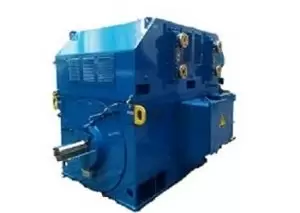
You probably notice a pattern in 2025 when you work with heavy industrial equipment.More projects start with a question like “Can a Chinese PMSM replace this imported motor?” instead of “Which imported motor should go in this line?”. The reason is not just price. PMSM technology from China now offers efficiency, torque, and reliability close to or even above many imported solutions, and it fits the way factories actually run. When electricity prices climb and downtime feels more painful each year, staying with older induction motor systems becomes harder to justify.
This article walks you through why Chinese PMSM manufacturers are taking a bigger share of industrial motor replacement in 2025, and what that means for your next conveyor, compressor, or ball mill upgrade.
Global Market Shift Toward PMSM in 2025
Across mining, rubber, water treatment, and process industries, you see more permanent magnet motor China projects in tender documents and retrofit plans. PMSM industrial applications keep expanding because they deliver high efficiency at both rated and partial load, which is where a lot of real machines actually spend their time.
A second driver is policy and cost pressure. Energy saving targets push owners to move beyond IE2 or IE3 induction motors. When a PMSM can reach IE4 and above, while also cutting reactive current from the grid, it becomes a natural candidate for industrial motor replacement 2025 rather than a niche option.
Technical Drivers Behind The Shift
You are no longer comparing a rough local product with a polished imported one. Chinese PMSM manufacturers now supply motors with rated efficiency 2–5% higher than normal asynchronous motors, even before you count gearbox losses. That gap is big when a motor runs 24/7. At the same time, power factor can reach 0.95–0.99, while many induction motors sit around 0.7–0.8. Less reactive current means smaller transformers and cables for the same active power, which matters when you expand a plant.
Technical Improvements That Make Chinese PMSM Competitive
If you compare Chinese PMSM vs imported motors only on nameplate power, you miss the real story. The change comes from what happens inside the frame: better rare-earth permanent magnets, multi-pole rotor design, and more mature stator fabrication.
Higher Efficiency And Power Factor
A modern PMSM from a good pmsm supplier China can reach system efficiency in the 93–97% range. Compared with a high-efficiency induction motor plus gearbox, you can gain 5–10% in real operating conditions. Power factor above 0.95 reduces current by more than 10% for the same shaft power, so switchgear and cables run cooler and last longer.
For you, this is not just a lab result. It shows up as lower kWh bills and more margin when the grid connection is already tight.
Torque Density And Low Temperature Rise
High torque PMSM design allows more torque in a smaller frame. With rare-earth magnets and compact electromagnetic design, temperature rise can be around 20K lower than a comparable three-phase asynchronous motor. Lower temperature means longer insulation life and more stable bearings. It also means you can sometimes drop one frame size without stressing the system, which helps when space on a platform or skid is limited.
Performance At Light Load
Many imported induction motors look good at 75–100% load, then lose efficiency quickly when the load drops below half. PMSM efficiency rises fast with increasing load, but it also stays high in the 25–120% range. If your conveyors, pumps, or mixers often run at partial load, PMSM efficiency comparison usually comes out in favor of the permanent magnet solution over the year, not just on test day.
Direct-Drive Advantages Over Traditional Motor Systems
Another big reason you see direct drive pmsm systems instead of imported gear-driven sets is mechanical simplicity. Older lines often use a high-speed induction motor plus reducer plus coupling. Every extra shaft is another failure point.
From Gearbox Systems To Direct Drive
By using a multi-pole rotor and high air-gap flux, PMSM can deliver low-speed, high-torque output directly to the driven equipment. For belt conveyors, ball mills, and extruders, this makes it possible to remove the gearbox entirely. The result is less vibration, lower noise, and almost maintenance-free drive trains. Nobody enjoys crawling under a hot conveyor to change oil in a reducer at 3 a.m.
Starting Current And Grid Impact
Typical induction motors need 5–7 times rated current at direct-on-line start. That can stress transformers and cause voltage dips, especially in remote mines. A PMSM driven by a dedicated controller ramps current according to load. Starting torque can reach more than twice the rated torque, but with much smaller current peaks. If you have weak grids or long cable runs, that difference alone can justify moving to PMSM vs induction motor 2025 projects.
Cost And Supply Benefits For Industrial Buyers
Technical gains matter, but budgets still decide. Here, Chinese PMSM manufacturers benefit from their position in the rare-earth supply chain and mature fabrication lines.
Lifecycle Cost Instead Of Just Purchase Price
On paper, a PMSM price can be close to or slightly higher than an imported induction motor. Once you include energy saving of 5–30% for low-voltage systems and 2–10% for high-voltage systems, the payback period often falls below two years. When you add reduced maintenance, no gearbox rebuild, and less unplanned downtime, the lifecycle cost gap grows even wider.
Delivery Time And Customization
Imported motors sometimes need long lead times, limited shaft options, or fixed cooling methods. A good pmsm custom motor supplier in China can adjust pole number, torque range, shaft standard, cooling type, and installation form for your project. That flexibility matters if you retrofit an old conveyor or ball mill where nothing is “standard” anymore.
Where Chinese PMSM Is Replacing Imported Motors
The shift is most visible where torque is high, speed is low, and downtime hurts production.
Belt Conveyors In Mining And Cement
For belt conveyors, pmsm for conveyor projects replace high-speed motors plus reducers. Low-speed high-power PMSM drive systems cover torque ranges from 3000 to 100000 N·m, with efficiency up to 96.4% and power factor near 0.99. In practice, this cuts energy use and removes one of the most common failure points in a conveying line.
Ball Mills And Heavy Rotating Equipment
Ring-type pmsm for ball mill projects can fit directly on the existing shell, using the large gear mounting holes as the motor interface. You keep the mechanical layout, lose the noisy gear mesh, and gain a compact drive that runs cooler. This is attractive in gold mines where shutdowns are very expensive.
Air Compressors And Rubber Machinery
In compressors, pmsm for compressor solutions show 10–15% higher efficiency than comparable asynchronous machines and allow soft start with less mechanical shock. In rubber mixing and extrusion, PMSM can save 7–40% energy compared with DC or induction motors, depending on process and load profile. For you as a buyer, these are not marketing numbers. They directly influence margin per ton of product.
A Trusted Example of Chinese PMSM Engineering
Qingdao Enneng Motor Co., Ltd. (ENNENG) focuses on permanent magnet synchronous motors for real industrial work. Its engineers design low-speed, high-torque PMSM for belt conveyors, ball mills, rubber machinery, air compressors, pumps, aerators, and similar heavy equipment. ENNENG motors reach efficiencies in the IE4 range, often 2–5% higher than common induction motors, and power factors up to about 0.99, so you cut both losses and current in the same move.
Many models share mounting dimensions with standard asynchronous motors, so you can replace imported units with minimal changes on site. ENNENG also supplies direct-drive PMSM systems for conveyors and heavy drives that remove gearboxes and reduce maintenance. Its motors already serve in gold mines, coal operations, tire factories, and water treatment plants, where energy saving and stable running matter more than a logo on the nameplate. If you are planning to replace imported motors with PMSM, ENNENG is the type of supplier you would want on your shortlist.
FAQ
Q1: Can a Chinese PMSM really replace an imported motor one-to-one?
A: In many cases, yes. For standard frame permanent magnet motors, the mounting size can match common induction motors, so you swap the motor and keep the base and coupling. For direct-drive systems, you normally remove the gearbox at the same time, so the project needs more engineering, but the long-term gain is bigger.
Q2: How fast can a PMSM pay back its higher purchase price?
A: It depends on running hours and electricity cost. With 5–30% energy saving and lower maintenance, payback often sits between one and three years for continuous-duty equipment. After that, the energy saving keeps going, while the imported induction motor would still burn the same extra kWh.
Q3: Is the control system for PMSM more difficult to handle?
A: Modern drives make PMSM control quite straightforward. Most variable frequency drives now support PMSM modes with vector control. Once commissioned, daily operation for your team feels similar to running an induction motor drive, just with better efficiency and higher torque at low speed.
Q4: What if the plant has a weak grid or long cable runs?
A: This is where PMSM helps. Starting current is much lower than direct-on-line starting of induction motors, because the drive ramps current. You get high starting torque without heavy voltage dips, which is useful for remote mines or old substations that are already loaded.
Q5: What information should you provide to get an accurate PMSM replacement plan?
A: Share your actual load, speed range, duty cycle, and whether a gearbox is used. With these basics, the supplier can size torque, cooling, and pole count correctly for your retrofit.


