
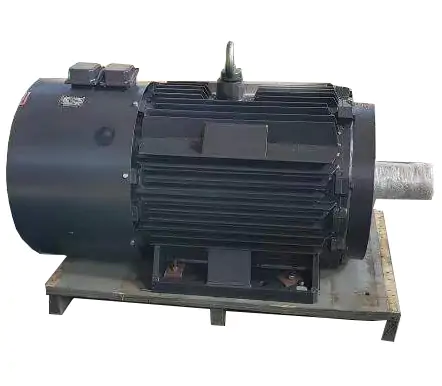
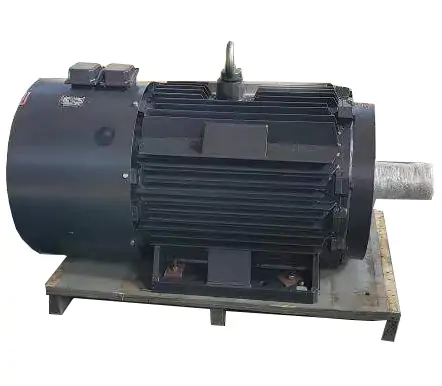
With a high torque at low rpm conveyor motor, you can drive the drum or head pulley directly. The gearbox can often come out. Fewer rotating joints mean fewer leak points and fewer bearing sets to fail. It also means less structure-borne vibration into the frame. People notice this fast—a noisy whining stand suddenly turns into a quiet low-rpm puller. That is not a small win if your night shift already complains about dB levels. For reference, you can review how a direct drive conveyor motor package built for conveyors is arranged to deliver steady torque at slow base speed with minimal vibration.
Why Are Conveyor Drives So Inefficient in the First Place?
Before looking at savings, it helps to look at where the waste comes from. Most legacy conveyor stations use a fast induction motor plus a gearbox plus a coupling. The motor spins fast because that is how an induction design likes to make torque. The gearbox then knocks that speed down to belt speed. Sounds normal. The problem is that each stage in that stack leaks energy. The gearbox throws power away as heat in gears and oil shear. The induction motor itself runs with slip, which is lost as rotor heat. You pay for that on the kWh bill, not later, now.
The Traditional Motor Plus Gearbox Stack
In a classic setup, you have a high-speed motor, sometimes with a soft starter, feeding a reducer. At low belt speed and high pull, that reducer runs hot. Bearings run hot. Oil gets dirty. Vibration rises with age. You end up paying to move the belt and paying again to heat the reducer housing like a space heater. It is common to see energy loss go up exactly when the belt needs slow controlled pull, like during heavy startup or when clearing a choke.
What That Waste Looks Like on Your Bill
That wasted energy shows up as high kWh per ton moved. You burn electricity but you are not always pushing useful tons. If the belt is inching, or tensioning, or starting loaded, the draw can spike while throughput is still basically zero. That is the hidden part most plants ignore. “It still runs” becomes the excuse. Meanwhile, the cost curve says the drive is eating margin.
What Is A Low-Speed High-Torque PMSM for Belt Conveyors?
A low-speed high-torque PMSM is built to skip the weakest link in that chain. Instead of spinning fast and then throwing power away in a reducer, it makes usable torque at low rpm right at the pulley. The point is simple. You get the pull without the gearbox doing all the dirty work.
The motor uses permanent magnets in the rotor. The rotor locks in step with the stator field, so there is almost no slip. Less slip means less I²R heat inside the rotor and less wasted energy in normal running. Power factor sits close to 1.0 and system efficiency can stay in the mid-90 percent range, even when the belt is creeping instead of cruising. That is important in plants where electricity is now one of the top three operating costs.
Direct Drive Instead of A Gearbox
With a high torque at low rpm conveyor motor, you can drive the drum or head pulley directly. The gearbox can often come out. Fewer rotating joints mean fewer leak points and fewer bearing sets to fail. It also means less structure-borne vibration into the frame. People notice this fast—a noisy whining stand suddenly turns into a quiet low-rpm puller. That is not a small win if your night shift already complains about dB levels, and you can see how a direct drive conveyor motor is packaged for belt duty and slow base speed in real applications designed for long-hour heavy service.
Stable Torque at Crawl Speed
A conveyor does not always run at full speed. Sometimes you inch it to inspect, track the belt, or clear a plug. Old induction-plus-gearbox drives tend to run hot and twitchy in that slow zone. Torque comes in pulses. You get belt slip or you get tension marks. A permanent magnet synchronous motor for conveyor duty keeps torque smooth down in single-digit rpm, so the belt pulls steady without jerk. That stability shows up later on your scrap report, not just your energy report.
How Do PMSM Drives Cut kWh per Ton in Real Work?
You care about kWh per ton because that blends two things: how much energy you pull and how many tons you actually move while you are pulling it. The permanent magnet drive changes both parts of that math.
Less Conversion Loss in Normal Run
When you remove the reducer, you remove a constant heat source. The energy that used to cook gear oil now turns the belt. That alone drops baseline draw. It is boring in the best way. You do the same job with less waste.
Better Low-Speed Control, Less Spill
When startup torque is high and smooth, you do not need a violent “slam start” to get a loaded belt moving. You stop spilling material at the tail and stop blowing product off the sides. Less spill means less shovel time, less cleanup, less restart drama. All that goes straight into more tons moved per shift.
Fewer Emergency Stops
That downtime wrecks your energy-per-ton math. Direct drive takes out several of those failure points, so you get more running hours in the same 24-hour window—same energy bought, more saleable tons moved. For a practical look at how this works in real installations, check out an energy-saving conveyor drive designed for slow-speed, high-torque belt pull using a direct drive conveyor motor setup.
Calculating ROI for PMSM Conveyor Upgrades
To demonstrate the tangible benefits of switching to a low-speed high-torque PMSM drive, start by benchmarking your current system’s performance against projected improvements. Focus on key metrics like overall equipment effectiveness (OEE), where reduced energy losses and minimized downtime directly boost productivity. For instance, estimate annual energy costs by multiplying your average kWh per ton from legacy drives—often inflated by gearbox inefficiencies and induction motor slip—against total throughput, then compare it to the mid-90% efficiency of PMSM setups that eliminate these wastes. Factor in maintenance savings by quantifying historical gearbox-related expenses, such as oil changes, seal replacements, and vibration-induced repairs, which can drop significantly with direct drive configurations. Additionally, project uptime gains: with smoother low-rpm torque delivery, expect fewer unscheduled stops from overheating or alignment issues, translating to more operational hours and higher tonnage output without proportional energy spikes. By running these calculations through a simple spreadsheet model, incorporating real plant data on power rates and production targets, you’ll uncover a compelling return on investment—often recouping costs in under two years through lower bills, less waste, and enhanced reliability, making the upgrade a strategic move rather than a mere replacement.
Who Provides Reliable PMSM Solutions for Belt Conveyors
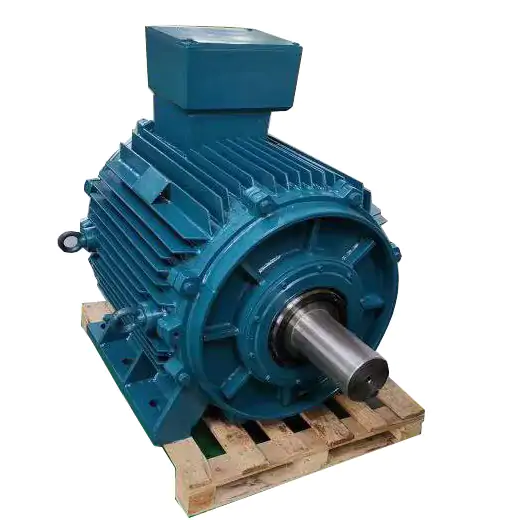
Qingdao Enneng Motor Co., Ltd. supplies slow-speed, high-torque permanent magnet synchronous motors sized for heavy-duty belt conveyors, wire drawing machines, oilfield PCP pumping, tire equipment, and aeration service. The drive is not a high-speed fan motor painted a different color. It is built to deliver production torque at very low base speed, often single-digit rpm, so a conveyor drum can be driven directly with no gearbox in the path. This shorter drive train cuts noise, cuts vibration into the frame, and takes common leak points off the floor. Power factor runs close to 1.0 and efficiency stays high across load, so plants see less wasted heat and fewer angry night calls for reducer fixes. Matching drive cabinets are supplied with the motor so you get smooth pull instead of a violent start, which protects belts, bearings, and shift schedules.
FAQ
Q1: Why does a permanent magnet synchronous motor for conveyor use less energy
A: The rotor runs in sync with the stator field, so there is almost no slip loss. You do not waste power as rotor heat, and you do not throw power away in a hot gearbox.
Q2: How does a direct drive conveyor motor help uptime
A: The gearbox is usually the high-failure item. Taking it out removes seals, oil service, and alignment headaches. Fewer stops means more tons moved in the same shift, which lowers kWh per ton.
Q3: Can a high torque at low rpm conveyor motor really start a loaded belt without shock
A: Yes. High pull at single-digit rpm lets you roll a heavy belt smoothly instead of slamming it. That cuts spill, belt slip, and breaker trips at start.
Q4:What industries benefit most from PMSM conveyor drives?
A: Mining, ports, and bulk handling industries see the biggest gains, with lower energy use during heavy loads and slow speeds cutting operational costs significantly.
Q5: How does switching to PMSM affect conveyor noise levels?
A: It drastically reduces noise by removing gearboxes and high-speed motors, creating a quieter environment that improves worker comfort and safety compliance.


